

Guide to Google E-E-A-T for Better SEO and Credibility
Google’s E-E-A-T principle can help improve your website content and search visibility. While it isn’t officially part of Google’s ranking algorithm, it offers real insight into what Google considers high-quality content. That’s why human quality raters, and increasingly SEO professionals, use these guidelines to evaluate content’s relevance and credibility across the web.
E-E-A-T stands for Experience, Expertise, Authoritativeness, and Trustworthiness. Each plays a distinct role in shaping how content is judged, both by Google’s evaluators and by the people reading your site. Many SEO professionals apply this principle to build trust with search engines and users alike. Aligning your content with E-E-A-T isn’t just about meeting Google’s standards; it’s about creating a genuinely more valuable experience for your audience.
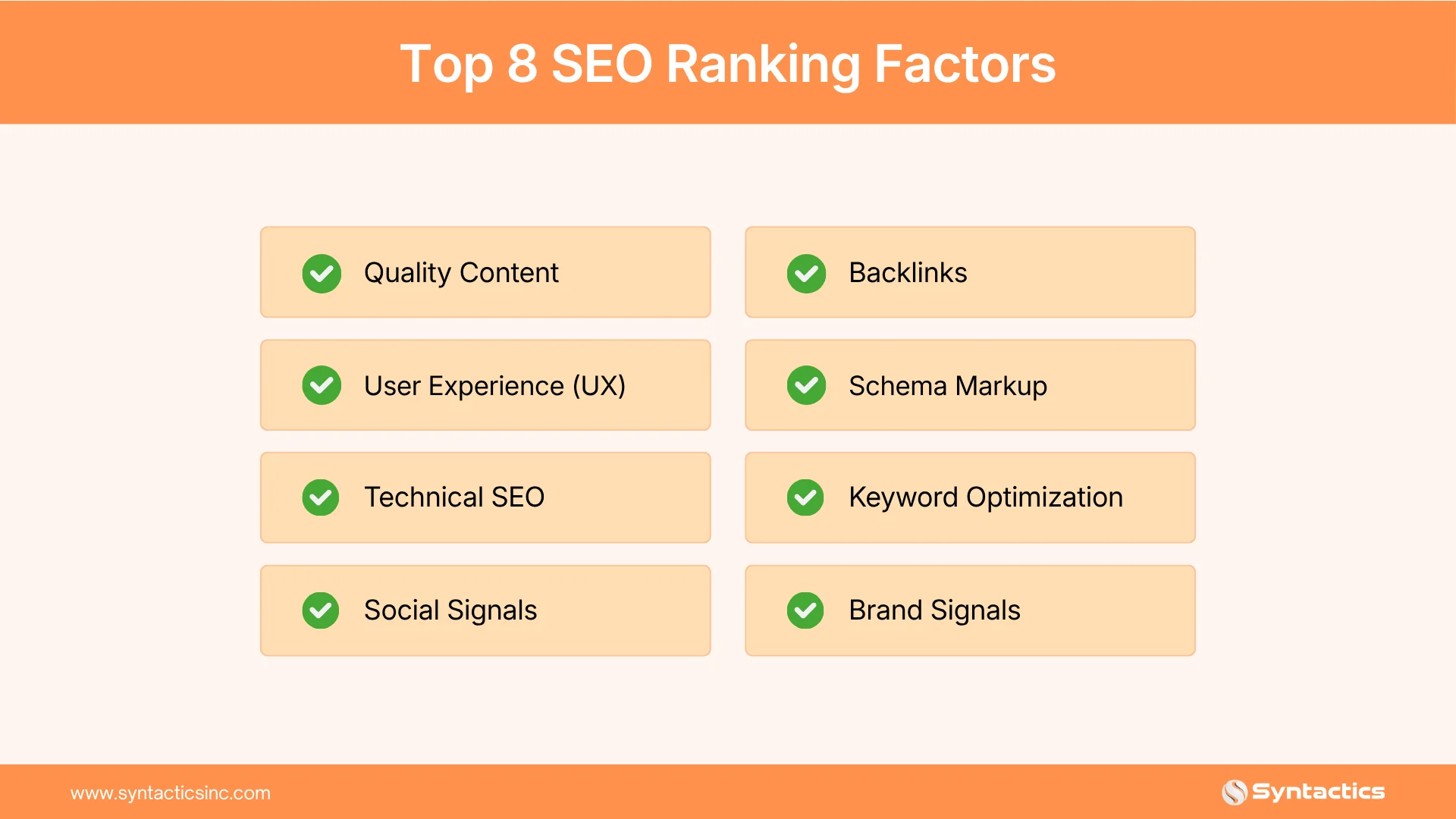
Source: Backlinko
How the Google E-E-A-T Principle Influences Search Rankings
Previously, human evaluators used E-A-T, Expertise, Authoritativeness, and Trustworthiness, as the core considerations for assessing content. Experience, closely tied to Expertise, was later added to surface more reliable, firsthand information. Google evaluators now use extensive quality guidelines to judge search result quality, aiming to find content that delivers the best possible user experience.
Websites that reflect the E-E-A-T principle are more likely to meet what users are actually searching for. That’s why following E-E-A-T remains one of the most reliable SEO ranking tips today, even years after it was introduced.
To strengthen your content with E-E-A-T, focus on these four credibility signals:
- Content author’s qualifications
- The website’s reputation
- Accuracy of information
- Content creator transparency
Below is a breakdown of each component of the E-E-A-T principle, along with practical ways to demonstrate it on your own site.
Expertise
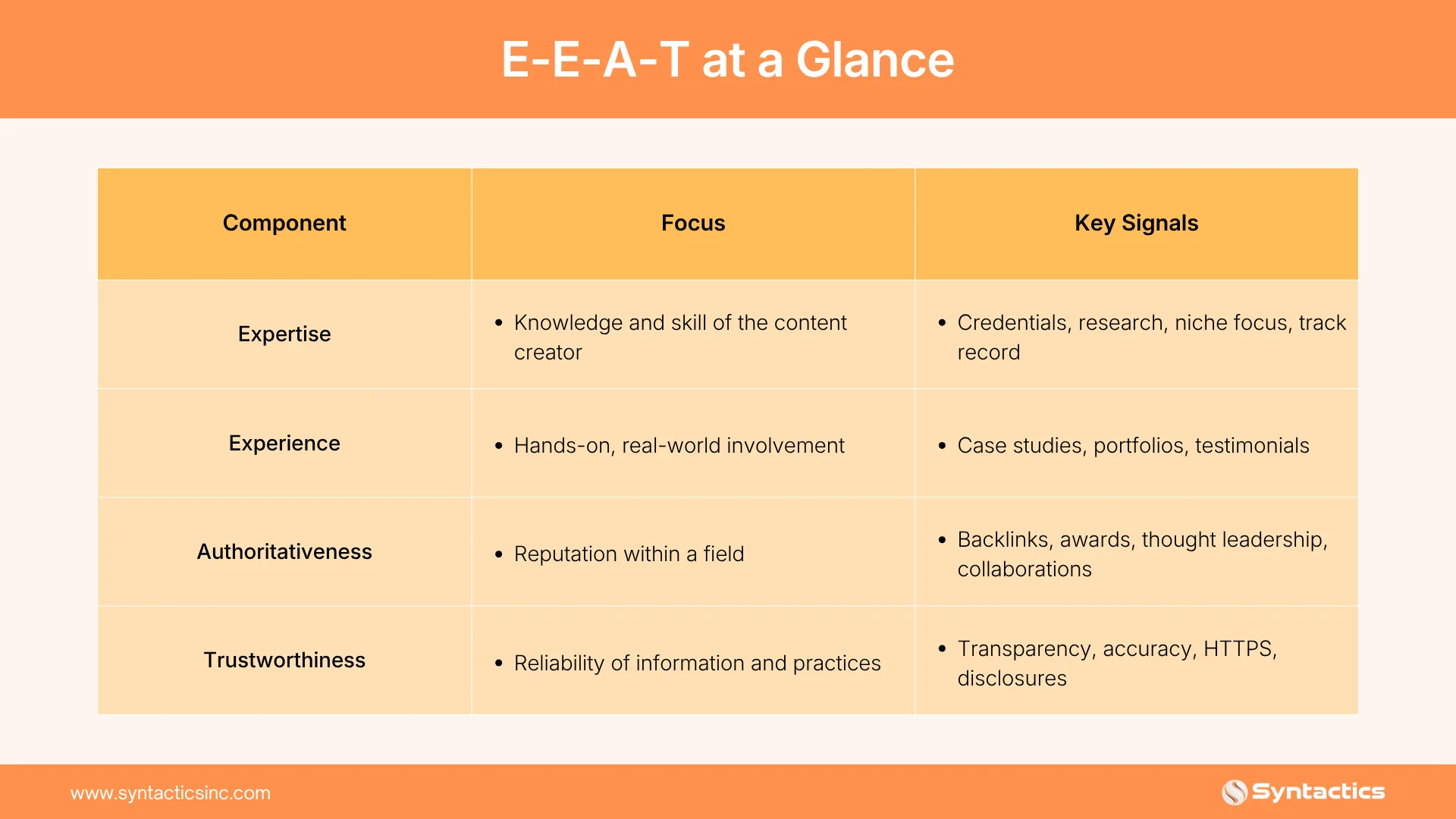
Expertise focuses on the content creator’s knowledge and skill. Your website should reflect this through accurate, reliable, and well-informed content that establishes credibility with searchers from the first paragraph.
Here are some ways to demonstrate Expertise:
- Have expert knowledge of a subject. Your content should reflect genuine subject-matter depth, not surface-level summaries.
- Display credentials or qualifications. Highlight relevant credentials, qualifications, degrees, and other distinctions on your website.
- Have a great track record. A documented history of accomplishments or successes builds credibility with users over time.
- Provide research and data. Use up-to-date research, statistics, and trends to support your claims instead of vague statements.
- Focus on a niche. Specializing in a particular niche makes it easier to establish and maintain Expertise.
- Actively contribute to the field. Share original insights through blogs, whitepapers, or speaking engagements.
Experience
Experience emphasizes real-world, hands-on involvement in your niche. Beyond gaining high-quality backlinks, it builds trust through demonstrated, practical application, proof that you’ve actually done the work, not just written about it.
Here’s how to show off your Experience:
- Practical application or hands-on work. Show how you’ve applied relevant skills through client work, services, or internal projects, such as solving specific problems.
- Publish case studies. Use real-world examples and results to demonstrate your capability.
- Share success stories. Highlight client results, milestones, or notable projects.
- Display a portfolio. A current, well-maintained portfolio is especially effective in creative or service-based industries.
- Show customer testimonials. Feedback from satisfied clients is one of the clearest ways to signal Experience.
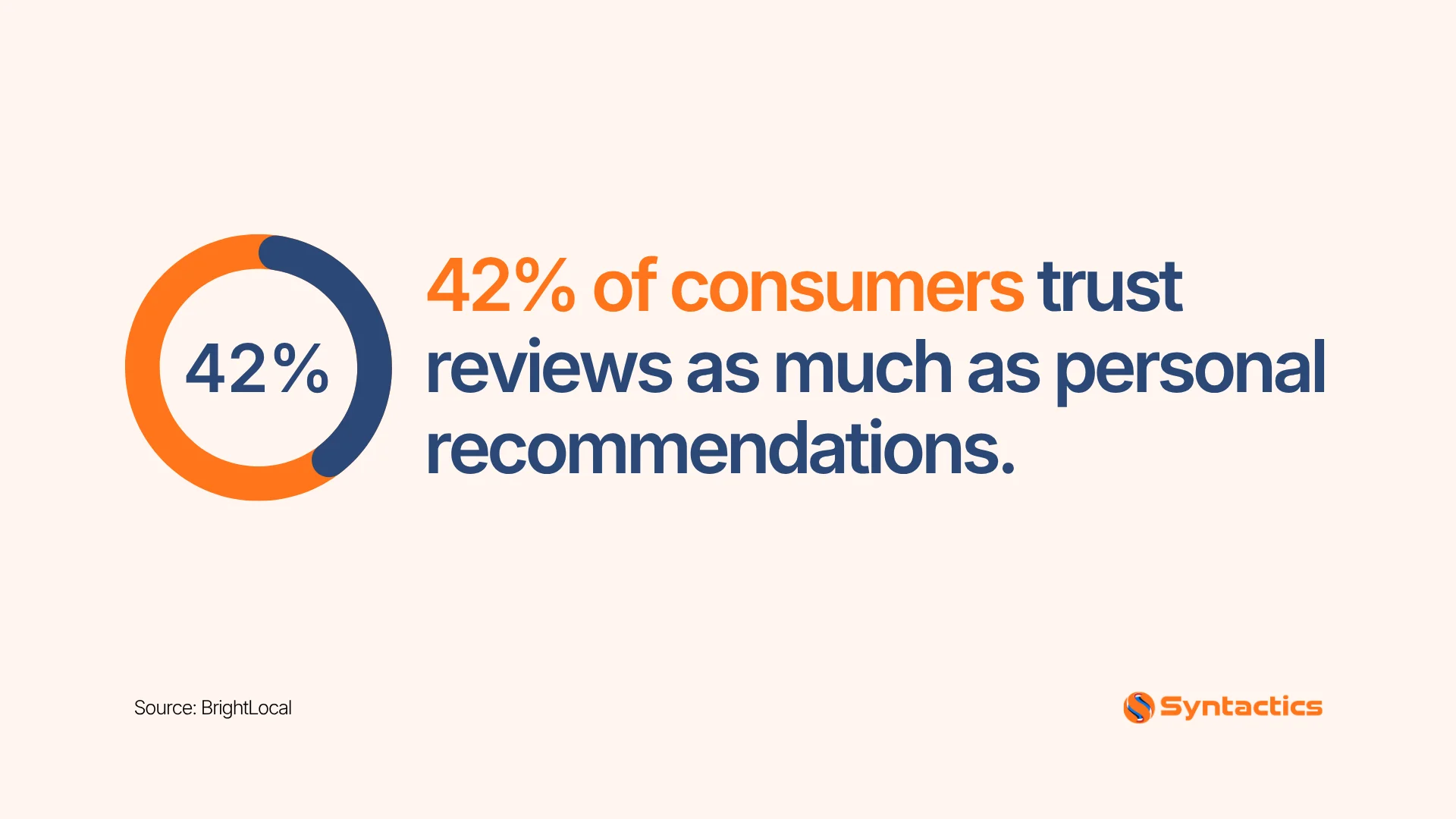
Source: BrightLocal
Authoritativeness
Authoritativeness reflects your reputation within your chosen field. Being cited or endorsed by other equally trustworthy sources is key to building this signal over time.
Some key signals for Authoritativeness include:
- Backlinks and citations. Earn links from reputable, industry-relevant websites. Following best practices for link building signals that your content is trustworthy and respectable.
- Awards or recognition. Credible recognition, including awards and certifications, contributes to your overall reputation. Recognition from within the industry or relevant associations is especially valuable.
- Thought leadership. Publish insightful articles or whitepapers and contribute to ongoing discussions within your industry.
- Collaborate with industry experts. Partner with recognized professionals in your field, co-author articles, join speaking engagements, or participate in panel discussions.
- Provide consistent, relevant content. Consistently produce content of high quality that stays relevant to your audience.
- Have a strong social media presence. Most consumers are active across various social networks, so stay active, provide value, and grow your follower base over time.
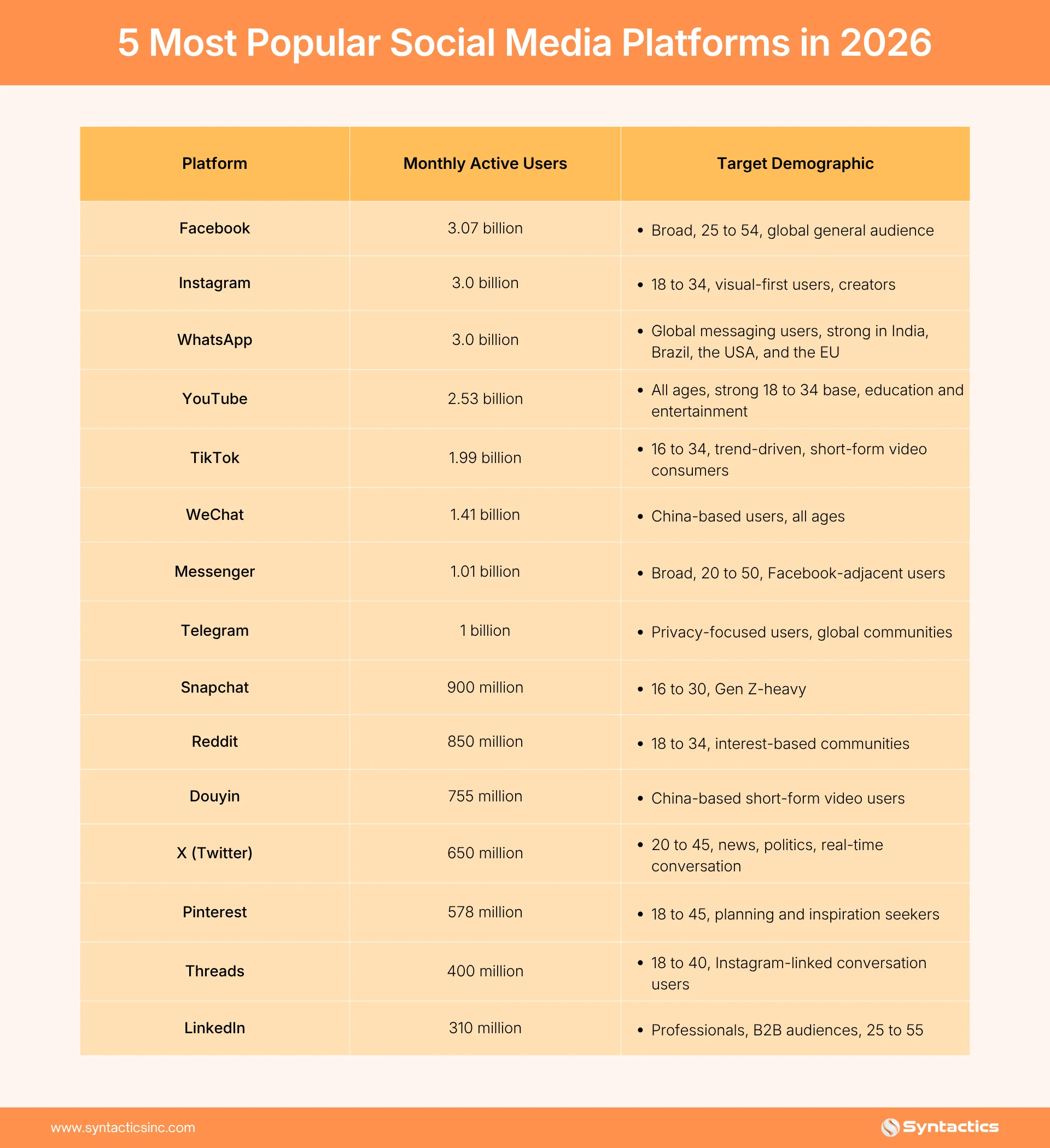
Source: Salesforce.
Trustworthiness
Trustworthiness is foundational to your website’s credibility. Google prioritizes accuracy, transparency, and ethical standards in both content and business practices, which makes this component arguably the most important of the four.
Here are critical considerations of Trustworthiness for E-E-A-T:
- Transparency. Clearly state who you are, how you operate, and the purpose behind your content.
- Provide accurate information. Accuracy matters as much as transparency; outdated or incorrect information quickly undermines trust.
- Utilize ethical practices. Prioritize privacy, disclose sponsorships, and adhere to legal and industry standards.
- Excellent user experience and website security. A secure, attractive, user-friendly website with HTTPS encryption helps users feel confident interacting with your site.
- Customer testimonials and reviews. Genuine, positive testimonials from satisfied customers or users reinforce your website’s trustworthiness.
- Customer support. Prompt, helpful customer support is critical for engaging with website visitors and addressing their concerns.
- Disclose affiliations and conflicts of interest. A website must clearly disclose any affiliations or sponsorships. Informing users of these or other potential conflicts of interest helps maintain transparency and trust.
The Google E-E-A-T principle remains part of the latest June 2025 Core Update, reinforcing that these signals continue to matter for long-term search visibility.
E-E-A-T at a Glance
Wrapping Up the Google E-E-A-T Principle
Following the Google E-E-A-T framework helps position your website as credible, reliable, and user-centered. It helps you build content that earns user trust and, over time, sustains long-term visibility in search.
Here’s a quick rundown of the four components:
- Expertise relates to a website or content creator’s knowledge and skill.
- Experience is an extension of Expertise, focused on practical, hands-on involvement.
- Authoritativeness refers to authority and reputation on a given subject.
- Trustworthiness is related to the dependability of website information.
All these characteristics contribute to the overall credibility and quality of your website content. The E-E-A-T principle and quality guidelines don’t directly affect search rankings, but they show what Google values when assessing website quality.
Instead of navigating these signals alone, you can partner with top SEO services in the Philippines. With the right team, implementing E-E-A-T becomes part of a broader, results-driven SEO strategy rather than a checklist you tackle in isolation.

This article was updated on September 25, 2026.
FAQs About Google E-E-A-T Principles
What is Google E-E-A-T?
E-E-A-T stands for Experience, Expertise, Authoritativeness, and Trustworthiness. It’s a framework Google uses to evaluate content quality, emphasizing real-life experience and credibility, especially for topics requiring hands-on knowledge.
How does E-E-A-T differ from E-A-T?
E-E-A-T adds “Experience” to the original E-A-T framework. This emphasizes firsthand, practical experience, ensuring content creators have direct, real-world knowledge, especially important for YMYL (Your Money or Your Life) topics.
Who should focus on E-E-A-T?
Content creators, website owners, and SEO professionals, especially in health, finance, and legal niches, should focus on E-E-A-T. Demonstrating experience and expertise builds trust and improves how Google evaluates content quality.

About Jalou Batilong
Related News:


Turn Clicks into Sales with Google Shopping Ads








Comment 0